How to Return to Exercise Confidently After Time Off
The first session back can feel disproportionately difficult. A familiar gym floor may suddenly feel intimidating, an old injury can occupy every thought, or a short walk can leave you wondering whether you have lost too much fitness. Learning how to return to exercise confidently is not about forcing yourself back to where you were. It is about understanding where your body is now, then building from there with a clear, sensible plan.
Time away from exercise happens for many reasons: injury, surgery, illness, work pressure, caring responsibilities, pregnancy, pain, bereavement or simply a change in routine. None of these are personal failures. But they can change your strength, mobility, stamina and belief in what your body can do. A good return to movement addresses all four.
Start with the body you have now
The temptation is to use your previous routine as the benchmark. If you used to run 10 kilometres, lift a certain weight or attend three classes a week, starting below that level can feel frustrating. Yet the most useful starting point is your current capacity, not a past version of yourself.
Your body adapts to reduced activity, but it also adapts positively when movement is reintroduced gradually. Muscles, tendons, joints and the cardiovascular system do not always regain capacity at the same rate. Your motivation may return quickly; your tissues may need more time. Respecting that difference is not being overly cautious. It is how you create progress that lasts.
Before choosing exercises, take stock of what feels easy, what feels restricted and what causes concern. Notice everyday markers too: getting up from a chair, carrying shopping, climbing stairs, reaching overhead, walking comfortably or sleeping without being disturbed by pain. These often provide a more meaningful picture than a number on a treadmill.
How to return to exercise confidently: assess before you push
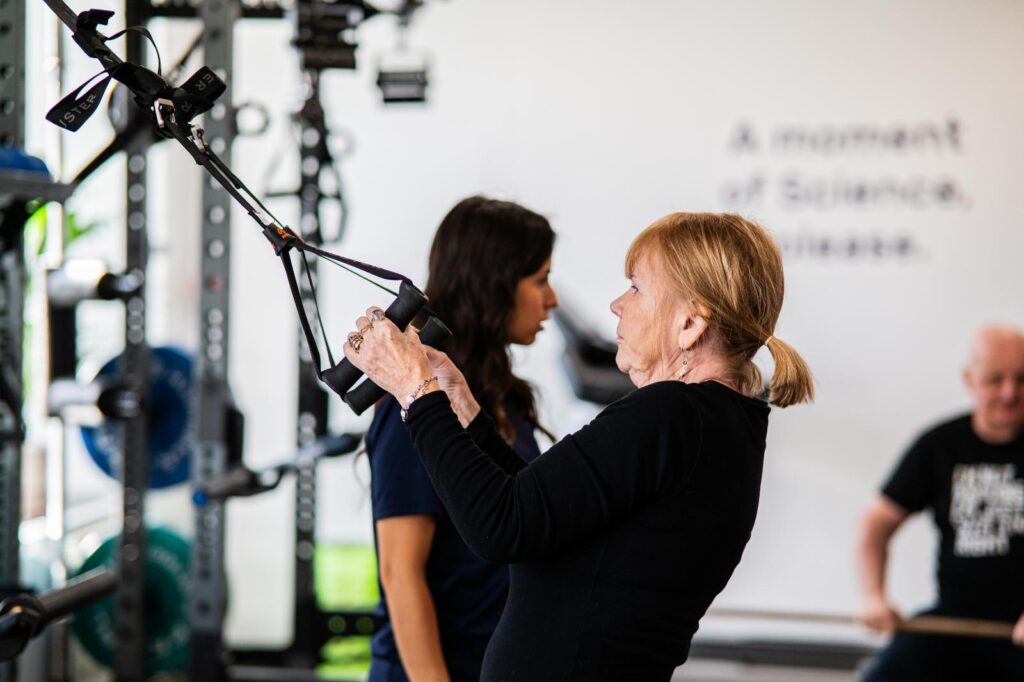
If you have been inactive for a while, are recovering from injury or surgery, or have recurring pain, an assessment can replace guesswork with direction. This is especially valuable when you are unsure whether a symptom is normal deconditioning, a mobility issue or something that needs clinical attention.
A structured movement assessment looks beyond the place that hurts. It considers how you move, your joint range, strength, balance, control and the demands you want to return to. At Health by Science, a Movement MOT is designed to identify these factors and help direct people towards the right next step, whether that is physiotherapy, rehabilitation, personal training, sports massage or a combination of support.
This matters because the right pathway depends on the person. Someone returning after an ankle injury may need progressive single-leg strength and confidence with impact. Someone who has spent months at a desk may benefit first from improving hip, upper-back and shoulder mobility alongside basic strength work. A runner returning after illness may need to rebuild general energy and walking tolerance before adding intervals.
Assessment is not about finding faults in your body. It is about creating a baseline and making decisions based on evidence rather than fear or online advice designed for someone else.
Make the first month deliberately manageable
Confidence grows when your plan gives you repeated proof that you can do what it asks of you. That means starting with an amount of exercise you can recover from, rather than an amount that leaves you exhausted, very sore or anxious about the next session.
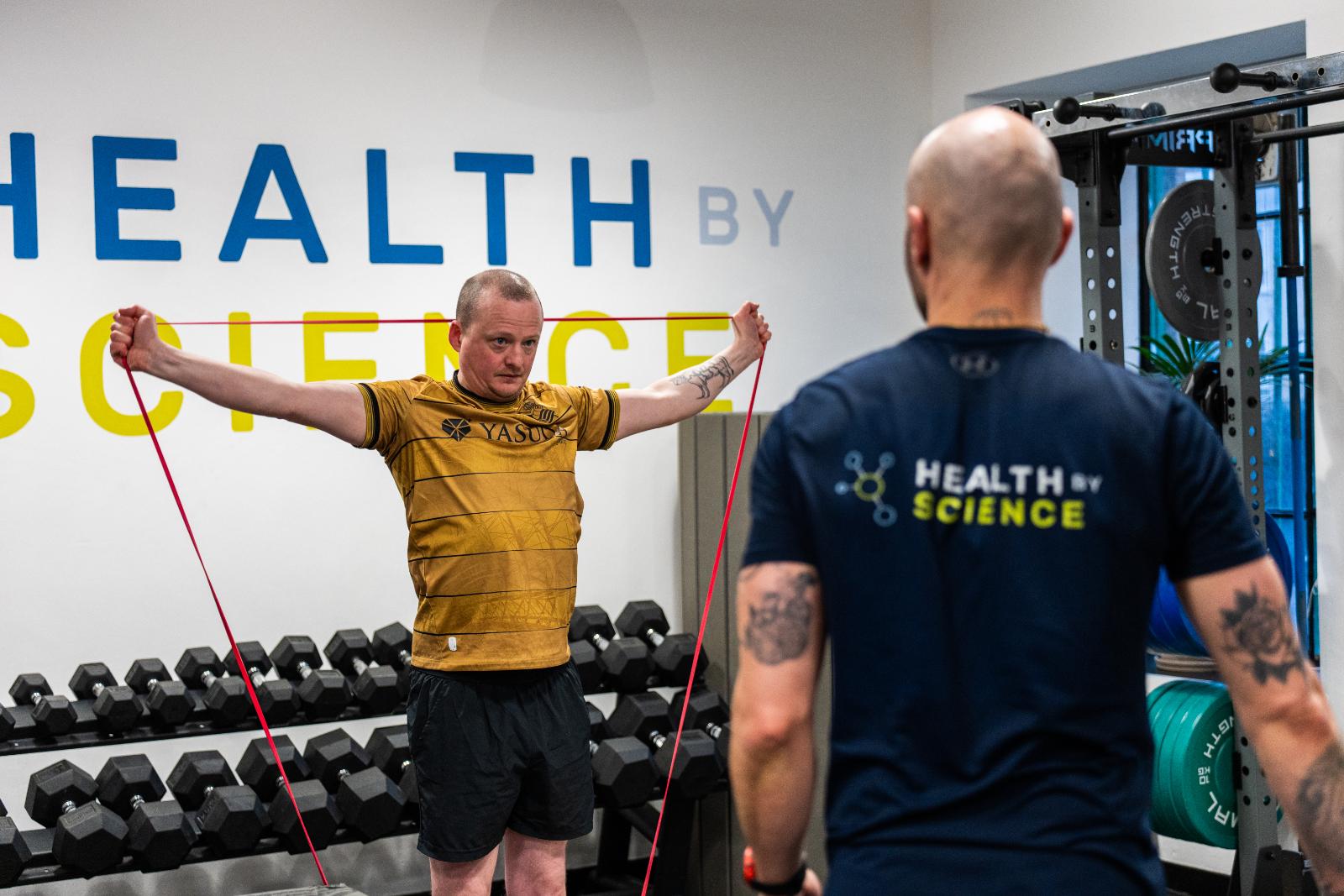
For many people, two or three short sessions each week are a better re-entry point than committing to daily workouts. Begin with movements that match your goals and feel controllable: walking, cycling, gentle resistance training, pool-based exercise, mobility work or a carefully adapted class. The best option is the one you can repeat consistently.
Keep the effort moderate at first. You should usually be able to maintain good technique, breathe steadily and feel as though you could have done a little more. A session does not need to leave you drenched in sweat to be useful. In fact, finishing with some capacity in reserve makes it easier to return again.
Progress one variable at a time. You might add five minutes to a walk, another set to a strength exercise, a little resistance, or one additional session during the week. Increasing duration, intensity, frequency and exercise complexity all at once makes it difficult to judge what your body is responding to.
Rebuild strength, not just fitness
When people talk about getting fit again, they often focus on cardio. Walking, cycling and swimming can be excellent ways to rebuild stamina, but strength is frequently the missing piece in a confident return to exercise.
Strength supports everyday life as well as sport. It can improve your ability to get up from the floor, lift luggage, play with children, manage hills and tolerate the demands of running or group exercise. It also gives you options: the stronger and more capable you feel, the less fragile movement tends to feel.
Start with patterns rather than complicated programmes. Squatting to a chair, hinging, stepping up, pushing, pulling, carrying and controlled single-leg work can be adapted to many starting points. The right resistance should feel challenging without compromising form or provoking symptoms that linger.
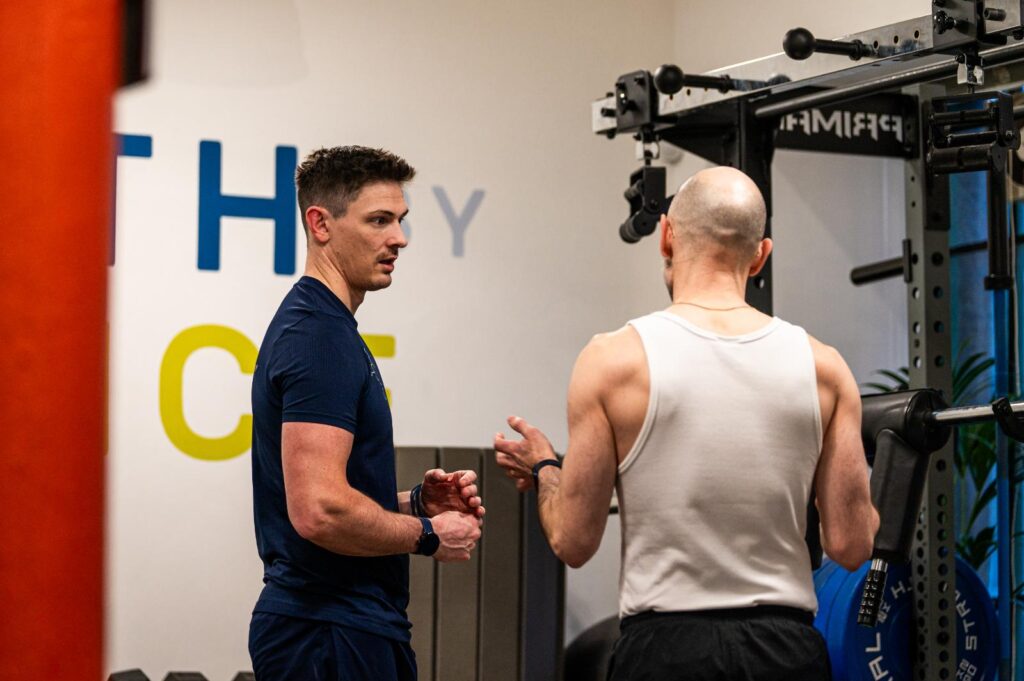
This is where personalised coaching can be particularly helpful. It is not simply about having someone count repetitions. A skilled coach can alter range of movement, load, tempo and exercise choice so that training meets you where you are, while still moving you forwards.
Learn the difference between effort and warning signs
Some discomfort is expected when you become more active. Muscles may feel tired, and delayed soreness can occur after unfamiliar activity. Mild stiffness that eases as you warm up or settles within a day or two can also be part of a normal return to training.
Pain is more complex. Sharp pain, swelling, joint instability, numbness, pins and needles, a significant loss of movement, or symptoms that steadily worsen should not be treated as something to push through. The same applies if pain disrupts sleep or changes how you walk or use a limb. Seek appropriate clinical advice rather than trying to train around it.
There is also a middle ground. Perhaps your knee feels mildly sore after a longer walk but settles by the next day, or your shoulder is uncomfortable only at the end of a particular range. These situations do not automatically mean you must stop all movement. They may mean the exercise, load or volume needs adapting. A physiotherapist can help you understand the pattern and keep you active safely where appropriate.
Build confidence through useful feedback
Confidence is often treated as something you either have or lack. In practice, it is built through experience. Every session you complete with good control, every flight of stairs that feels easier and every movement you previously avoided becomes evidence that your body is becoming more capable.
Track simple measures that matter to you. This could be the distance you walk without stopping, how comfortably you can sit at your desk, the weight you can carry, your energy after a session or your confidence on uneven ground. These markers are often more encouraging than scales, calorie counts or comparisons with other people.
It also helps to plan for imperfect weeks. Work deadlines, family life and poor sleep will affect training. Missing a session does not erase your progress. Rather than trying to compensate with an overly hard workout, return to the next planned session. Long-term consistency is usually less dramatic than motivation-led bursts, but it is far more effective.
Choose support that joins the dots
Generic programmes can be useful for a healthy person with a clear starting point. They are less helpful when pain, injury history, low confidence or specific performance goals are part of the picture. In those circumstances, care should connect the clinical and training sides of your return.
The aim is not to remain dependent on appointments. It is to understand your body, develop practical skills and have a plan that evolves as you improve. Sometimes that means beginning with rehabilitation and progressing into strength training. Sometimes it means maintaining training while addressing a recurring problem. The right approach changes as your capacity changes.
Returning to exercise is not a test of whether you can tolerate the routine you once had. It is an opportunity to build a more informed relationship with movement: one based on capability, clear feedback and goals that fit the life you are living now. Start small enough to succeed, get expert support when the path is unclear, and allow each steady session to remind you what your body can do.