How Rehab and Training Work Together for Recovery
A painful knee may settle enough for you to walk comfortably, but that does not always mean it is ready for hills, football, squats or a busy day on your feet. This is where understanding how rehab and training work together changes the recovery process. Rehab helps you address the reasons a problem developed or persisted. Training then helps you build the strength, capacity and confidence to return to the life you want to lead.
For many people, the gap between treatment and normal activity is where progress stalls. Symptoms improve, appointments end, and a generic gym plan or cautious return to exercise follows. A coordinated approach gives you a clearer route forward: assess what your body needs, restore the basics, and gradually prepare for the demands that matter to you.
Rehab resolves the barriers to movement
Rehabilitation is not simply a set of exercises handed over after an injury. It is a structured process that identifies what is limiting you and uses targeted treatment, education and progressive movement to improve it.
That limitation may be pain after surgery, reduced mobility following a period of inactivity, poor balance, weakness after an ankle sprain or uncertainty about moving after a back flare-up. It may also be a pattern that has built gradually, such as recurring shoulder discomfort during work, running or strength training.
A physiotherapist will consider the whole picture: your symptoms, medical history, movement quality, current activity, goals and the specific tasks you need to do. The aim is not to chase a perfect posture or remove every sensation immediately. It is to understand what is relevant, reduce unnecessary barriers and create a safe starting point for progress.
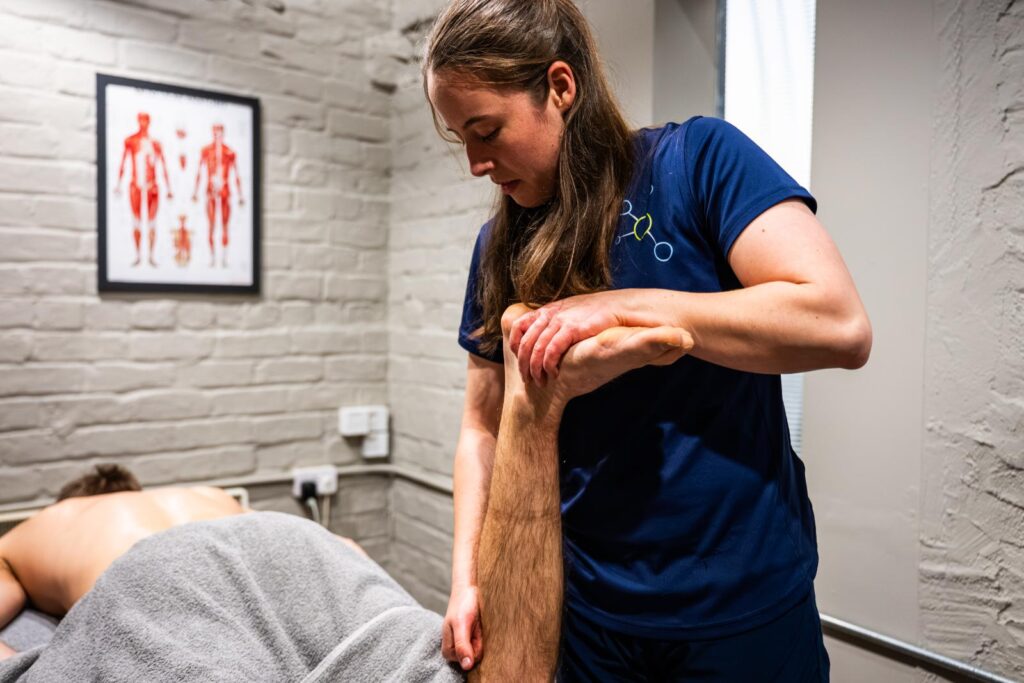
Hands-on treatment or sports massage can be useful when it helps you move more comfortably, manage symptoms or tolerate exercise. But these approaches are usually most valuable when they support active rehabilitation, rather than replacing it. Lasting change comes from helping your body gradually do more.
Training builds capacity for real life
Once movement is possible, training gives that movement a purpose. It develops the physical qualities that make everyday activity and sport more manageable: strength, balance, coordination, fitness, power and endurance.
This matters because rehabilitation goals are rarely limited to being pain-free in a clinic. You may want to carry a child without worrying about your back, feel secure on Edinburgh’s steep streets, get back to a weekly run, return to work after surgery or lift weights with confidence. Those outcomes require capacity, not just symptom relief.
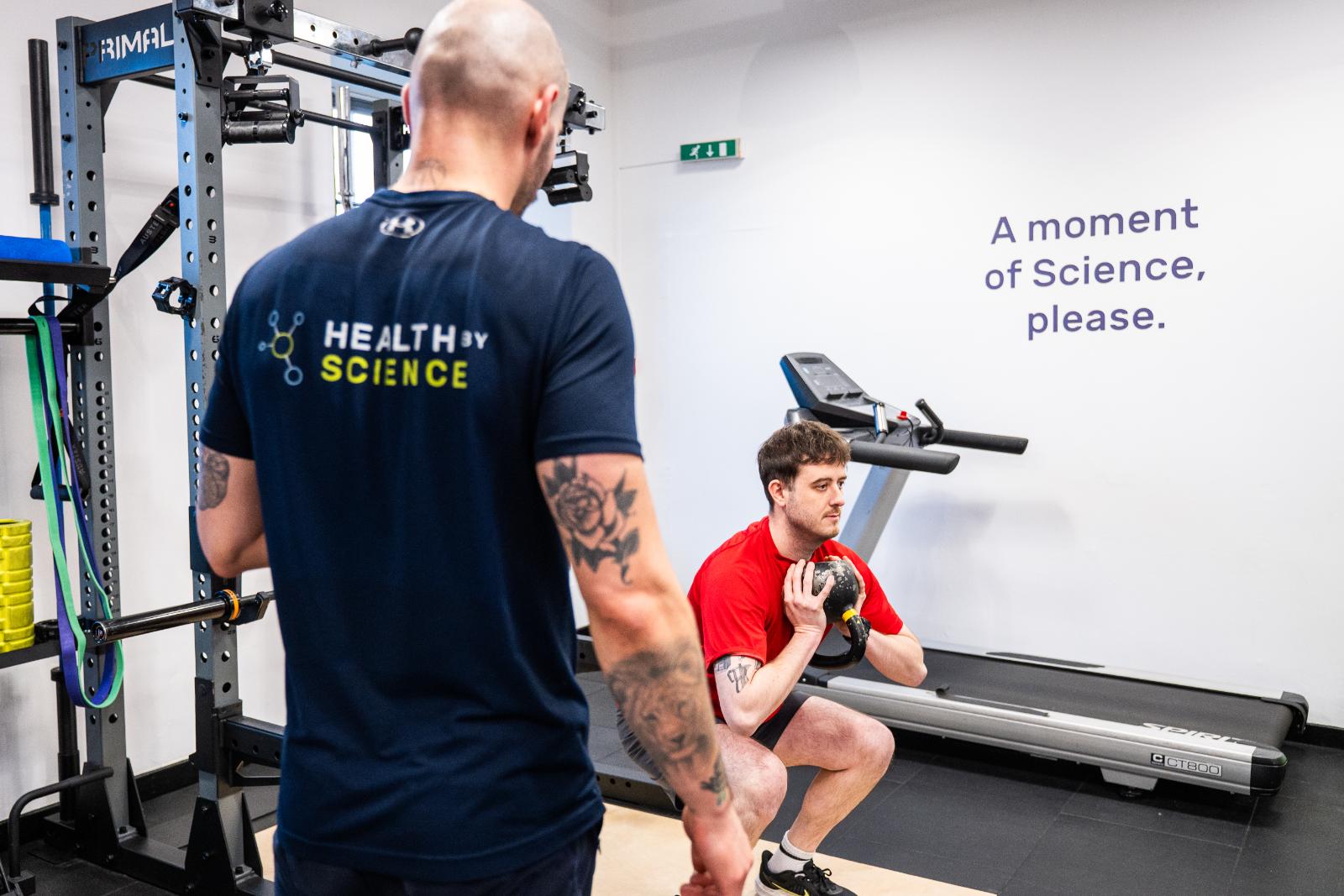
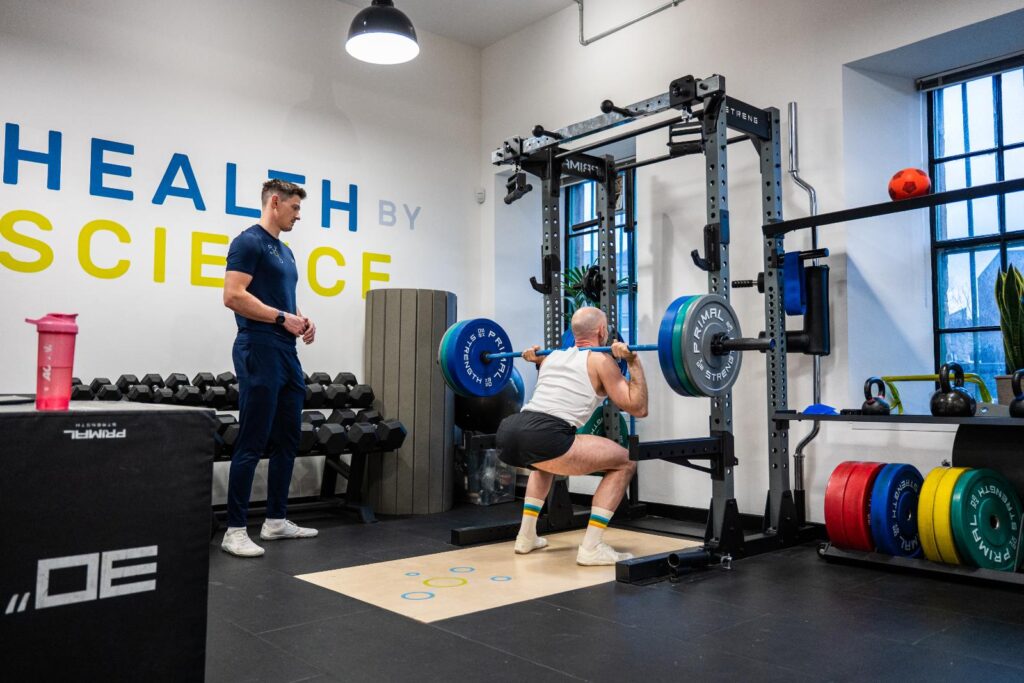
Personal training is particularly valuable when it is informed by your rehabilitation plan. Your programme can build from the movements you have already practised, with appropriate adjustments to load, range of motion, pace and recovery. A squat may begin as a supported sit-to-stand, progress to a bodyweight movement, then become a loaded exercise that improves your ability to climb stairs, hike, play sport or train independently.
Training is not a reward reserved for the point when you are completely fixed. In many cases, it is part of the solution. The right amount of carefully chosen loading can improve tissue tolerance, restore confidence and show you that your body is more capable than you may have feared.
How rehab and training work together in practice
The most effective plans are not divided into a short period of rehab followed by an unrelated fitness programme. They overlap, with the emphasis changing as your capability grows.
Early on, rehabilitation may take the lead. If pain, swelling, restricted movement or a recent operation is limiting you, the priority is to establish a manageable baseline. This could mean improving knee bend after surgery, rebuilding shoulder control, regaining ankle mobility or finding ways to stay active without aggravating symptoms.
As those basics improve, training becomes more prominent. Exercises are progressed according to how you respond, not according to a rigid timetable. You might add resistance, increase repetitions, introduce single-leg work, practise faster movements or build the duration of a walk or run. The goal is to expose you to enough challenge to adapt, while avoiding jumps in load that your body is not yet prepared for.
Later, the programme should resemble the life or activity you are returning to. A runner may need gradual impact work, calf strength and running-specific drills. Someone returning to gardening may need repeated lifting, kneeling and getting up from the floor. A person rebuilding confidence in the gym may need coaching around technique, appropriate loading and how to adapt sessions when energy or symptoms change.
This is not a straight line. Recovery often includes better weeks and more difficult ones. A sensible plan leaves room to adjust rather than treating a flare-up as failure. Sometimes the answer is to reduce volume temporarily, improve sleep and recovery, modify one exercise or revisit technique. Sometimes it is appropriate to continue moving, even if symptoms are not entirely absent. Clinical judgement helps distinguish between a tolerable response to activity and a sign that a programme needs changing.
Assessment creates a clear starting point
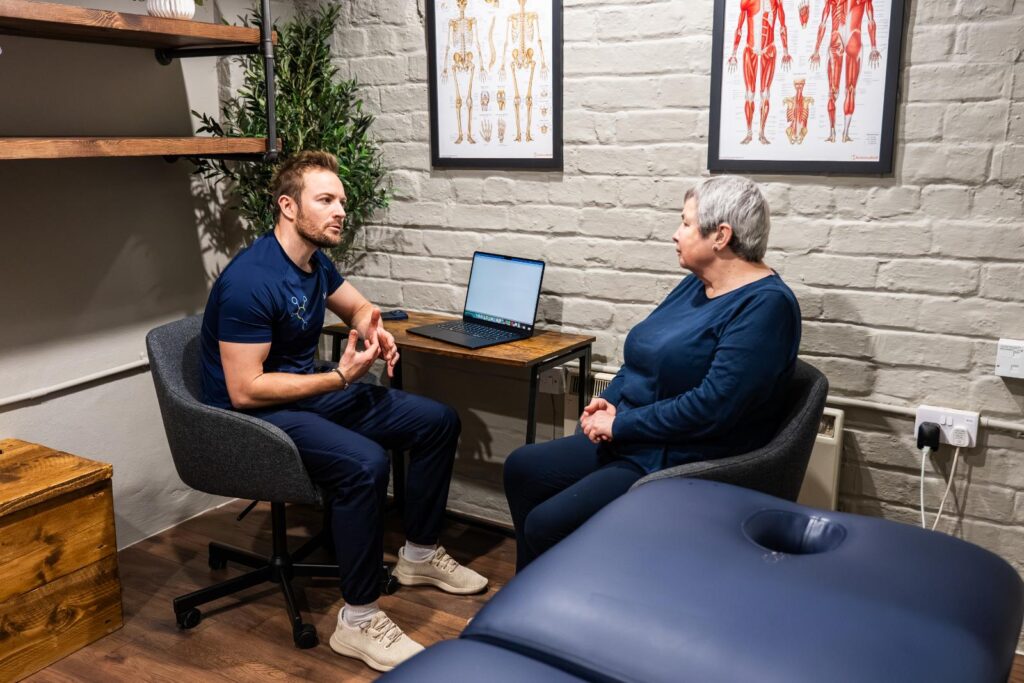
Before deciding whether you need physiotherapy, personal training, sports massage or a rehabilitation class, it helps to understand your current movement and capacity. At Health by Science, the Movement MOT is designed to do exactly that.
It is a structured assessment of movement, strength and mobility that looks beyond the single painful area. It gives you the opportunity to explain what you want to get back to, what has been difficult and what has or has not worked before. From there, the right pathway can be built around your needs.
For some people, this will mean starting with physiotherapy to assess an injury, manage symptoms and build an initial rehabilitation plan. For others, the best next step may be supported strength training or a rehab class that makes consistent exercise more achievable. If soft-tissue work is appropriate, sports massage can sit alongside the active plan rather than becoming the entire plan.
The value lies in coordination. When the people supporting you share an understanding of your goals and progress, you do not have to start from scratch at every stage. Your clinical findings can inform your training, and your experience in training can inform the next step in rehab.
Progression should be personal, not generic
Two people can have the same diagnosis and need very different programmes. One person recovering from a knee injury may be aiming to return to competitive sport. Another may want to walk the dog comfortably and feel less anxious using stairs. Their exercise selection, pace of progression and definition of success should reflect that.
The same is true for people managing persistent pain, menopause-related changes in strength and recovery, long-term mobility concerns or the effects of a sedentary job. There is no single exercise that suits everyone, and there is no universal point at which a person is “ready” for training.
A good plan is challenging enough to produce adaptation but realistic enough to maintain. Two 30 minute focused sessions a week that fit around work and family commitments may deliver more than an ambitious programme that is abandoned after ten days. The best programme is not the hardest one on paper. It is the one you can perform consistently, progress thoughtfully and trust when life becomes busy.
Confidence is a physical outcome too
Injury and pain can make movement feel uncertain. People often begin avoiding the activities they associate with discomfort: lifting, bending, running, going to the gym or even taking a longer walk. Avoidance may feel sensible in the short term, but it can reduce strength and confidence over time.
Rehab and training provide a practical way to rebuild trust. Each successful repetition offers evidence that you can move safely. Each gradual increase in load or distance shows that your body can adapt. The aim is not to promise that you will never experience pain or setbacks again. It is to help you understand your body, respond calmly when symptoms appear and retain the skills to stay active for the long term.
That is why clear coaching matters. You should know what an exercise is for, what level of effort is expected and how to judge your response over the following day or two. Feeling informed removes some of the uncertainty that can make recovery harder than it needs to be.
A stronger return starts with the right next step
Whether you are recovering from surgery, managing a recurring problem or simply noticing that your body no longer feels as capable as it once did, you do not need to choose between treatment and exercise. The right support connects them.
Start by identifying what is limiting you now and what you want to be able to do next. With an evidence-based plan that combines rehabilitation and progressive training, recovery can become more than getting back to where you were. It can be the beginning of feeling stronger, more confident and better prepared for the years ahead.